


























The History of Perfume
 |
Denounced by Plato as effeminate and believed by Kant to be vulgar and sordid, the predominately negative significance given to smell and all kinds of odors led many scholars to assign this sense a place at the bottom of the hierarchy of senses. "As the sense of lust, desire and impulse it carries the stamp of animality." As someone once wrote. The association of smell with animality was also justified in the following terms. "Animals sniff a lot and, moreover, man is often not capable of expressing smells in language, a capacity which is quintessentially human and testifies to civilization." (Vroon, 1997:pg.8)
But what of the perception of scent in the past? Should it be shrugged off as ideologies of fools?
Let us reflect:
Egypt
The Egyptians presented a civilization that stood the test of time and opened a door to the past.
The Egyptians were famous for their scents and perfumes. Egypt was considered a most suitable country for the manufacture of such commodities and when certain oils could not be manufactured such as cypress and cedarwood, they were imported. (Walters 1998 pg. 11)
The most famous Egyptian perfume was made in the city of Mendes in the Delta and exported to Rome, it consisted of balanos oil, myrrh, and resin (Pliny, NH. XIII.ii).
As with all the perfumes manufactured in Egypt, the secret behind the success of the scents was the order in which the materials were added to the oil as the last one imparted the most pungent scent. Theophrastus mentions as an example that if one pound of myrrh is added to half a pint of oil, and at a later stage one third of an ounce of cinnamon was put in, the cinnamon will dominate. Temperature at the time of manufacture was also considered to be an important factor in the success of the scent. (Manniche, 1993 pg 48)
The entire process of the manufacture of oils, unguents, perfumes, scented fats, and medicines was so important that the Egyptians documented the entire process on clay tablets, papyrus and walls. Although letters were not used, pictures and symbols depict the process with amazing accuracy.
Of all the scents to be manufactured by the Egyptians, the most important was Kyphi. Kyphi was made without oil or fat but rather based on wine and raisins with a number of added aromatic herbs and resins. Kyphi was burnt in temples and although best described by Dioscorides as an acquired taste, it was also added to beverages.
|
Kyphi
("Welcome" to the Gods)
. ½ pint cypress ½ pint juniper berries 12lb. Stoned plum raisins 5lb. Resin 1lb. Aromatic rush, 1 lb. Asphalatus 1 lb. Iuncus odoratus 1 ½ oz myrrh 8 ½ pint old wine (more than likely mead) 2lb honey
(Dioscorides I.24)
|
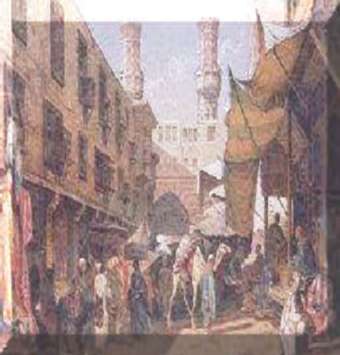 |
Arabia
Known for it’s production of attars from the Arabic word itr meaning perfume, India was also highly regarded for the most prized substances in the civilized world, valued as highly as gold and the gift of kings.
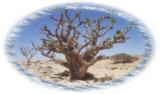
One such substance is the best quality frankincense, known as 'Silver Incense'. It is grown in what is now the Dhofar region of Oman. The Roman historian Pliny described it as "brilliant white and gathered at dawn in drops or tears in the shape of pearls".
These 'pearls', of resin were so prized that Alexander the Great planned to invade Arabia in order to control the trade in incense at its point of origin, a plan thwarted only by his death.
Frankincense is indeed a wonderful scent, however, it is difficult to understand why it was so highly valued that even the Chinese sent porcelain dishes to trade for it. The answer is philosophical, it was believed that the smoke and scent of incense carried with it the prayers of man to Heaven. No matter what ceremony was observed, incense was burned.
Functionally, incense had the power to preserve, it was observed that perfumers were immune to the plague during such periods and doctors soaked their clothing in Frankincense to ward off the disease.
The demand for frankincense increased, not only for religious and medical purposes, but also as a major ingredient in perfumery. History suggests, the perfumes of Arabia were regarded as the best. Arab perfumers had perfected sophisticated techniques of distillation, blending and fixing; their secret methods and formulae handed down from father to son. What's more, their land provided so many essential ingredients.
Excavation of the "lost" desert city of Ubar, which fell below the sands to the north of the frankincense-producing area 5000 years ago is beginning to suggest that this city was a major trading center for Frankincense. It was the epicenter of a 90-kilometer area of trade. This route became popular to avoid paying a tax imposed on all Frankincense traders who traveled through Shabwa. (Oman telecommunication Co.)
There is an ancient association of Arabia with high-class perfumes. And in so doing developed Amouage the most precious perfume ever created. The name translated into English means waves, waves of emotion.
(Perfumers Handbook 1992 pg. 8)
India
 |
2500 BC would be marked as the period of "life knowledge" or Ayurveda in India. Texts dating back to 2500bc depict the use of herbs and oils as a source of medicine to treat imbalances in the body. Spirituality was an important factor in the health of each individual. When a person fell ill it was a direct reflection of a state of disharmony between that person, their environment and the spirit world. Consequently the earliest acts of healing endeavored to appease the gods or spirits. In India and many other cultures fragrant odors were thought to please the gods. |
China
| China also considered the use of essential oils as a source of medicine. Traditional Chinese medicine is an ancient system of healing that has survived into the present. The Yellow Emperor’s Book of Internal Medicine dates back to 2000BC and the great classic of Chinese herbal medicine, know as Pen ts’ ao kang-mou lists over 8000 formulae. (Walters 1998 pg. 11 |
 |
Hebrew
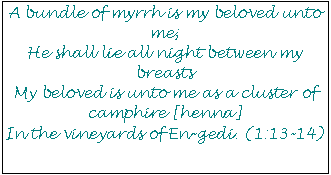 |
Babylon
By the late 5th century, Babylon was the principal market for the perfume trade. The Babylonians used cedar of Lebanon, cypress, pine, fir resin, myrtle, calamus and juniper extensively. When the Jews returned from captivity in Babylon, they brought back a heightened appreciation of fragrance, especially in the form of incense. (Kathy Kevell and Mindy Green)
When preparing aromas, the Babylonians unlike the Egyptians did not record what quantities to use, perhaps this was general knowledge, what they did record however was what time of day the preparations should be made and used-usually at sunrise (Walters 1998 pg 12)
Near the earthly Paradise the Garden of Eden, King Nebuchandnezzar built the famous Hanging Gardens to please his wife Amytes. He also filled the temples with the odor of incense.
After Solomon’s death, constant quarreling divided the house of David and formed two independent states, Israel in the south and Judah in the north, within three hundred years Assyrians conquered both
Assyria and Persia
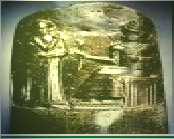 |
Unlike the Jews, Assyrians had many deities, the most prominent being the sun god Baal, seven towers raised one upon another in honour of Baal in Babylon is believed by historians to be the Tower of Babel. According to Herodotus, the uppermost part contained an ornate couch occupied by a woman, lavishly attired and redolent with perfumes, chosen by the god for his own enjoyment.
Assyrian women would bruise with a stone, wood of the cypress, cedar and frankincense and upon it poured water until it became of a certain consistency, they anointed the body and face to impart the fragrance. When removed the following day, it left the skin silky and in beautiful condition and impregnated with a favorable odor.
In addition to having a historical reputation for beauty, soft skin, and anointing their body with scent, the Assyrians were also regarded for their hair and beard, no one devoted more care than the Assyrians to the hair and beard.
Assyrians perfumes were famous throughout the East. Bottles of alabaster and glass were discovered in the excavations at Neneveh in 1845. The expedition was also responsible for making the greatest historical discovery; within the library of King Ashurbanipal, greatest of the Assyrian Kings, were clay tablets that would later be translated and give new meaning to the Old Testament which had remained unintelligible to Biblical scholars.
The Assyrians were victorius in their pursuit to rule, by 650BC, under the rule of Ashurbanipal the Assyrian Empire stretched from the Nile to the Indus and was by far the most powerful ever known.
By 640BC, the Assyrians found themselves in a defensive position against the Medes, Egypt hastened to their aid but were unable to defeat the Medes and returned to their own country humiliated, they would never regain their former glory.
Ashurbanipal died by his own hand in 636BC by lying down upon blazing fragrant woods and gums. By then he had adopted female dress, lavishly used scent and painted his face like a woman.
The Assyrian Empire was shattered and divided between the Medes and Babylonians, however, that would only last 60n years before all was defeated by Cyrus, King of Persia (the liberator) in 550BC. By 500BC the Persian Empire would dominate the entire western world.
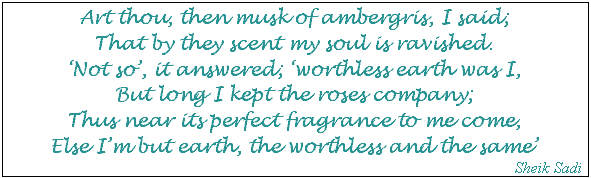
The Persians adopted their taste for perfume and cosmetics from the Medes whose King Astyages had adorned himself with a perfumed wig of flowing ringlets, had colored his eyes with mascara, and his face with henna. The Persians wore crowns of myrrh and labyzus. Aromatics were constantly burnt to perfume their apartments.
Persians of high rank so loved the scent of perfumes that gardens of exquisite beauty were made for their pleasure.
It was rumored that rose petals were used to cover the floors of the royal apartments to a depth of eighteen inches for Cleopatras’ first meeting with Marc Antony.
 |
333BC marked the defeat of Darius III of Persia in battle of Issus in Northern Syria. It was in 491BC however that the Greek armies defeated the Persians at Marathon in one of the decisive battles of the world, but not until Alexander did the Greeks show an interest in world conquest.
Greece
 |
|
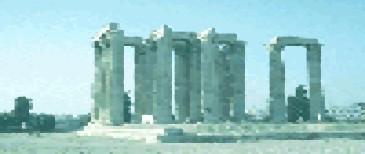
Temple of Zeus Olympios
|
Poets always referred to a cloud of fragrance when mentioning an apparition of a goddess; when Cupid’s mother visited Achilles:
| Celestial Venus hovered o’er head
And roseate unguents heavenly fragrance shed. |
|
Homer
|
It was also suggested by Diogenes to anoint the feet and legs with perfume so as to allow the scent to envelope the whole body, as when you anoint your head with perfume it flies off into the air and only the birds obtain any benefit. However, Apollonius believed that the scent was the sweetest when applied to the wrist, as they do to this day.
In Greece, the word Aromata was used to describe all aspects of scent including medicine; Greek perfumers, mainly women, had materials imported from Egypt, Arabia, and India to develop the preferred floral scents.